How to Choose the Best Outdoor Counter Cabinet for Your Space?
Creating the perfect outdoor space requires careful consideration of furniture and storage options. An Outdoor Counter Cabinet can enhance your area's functionality and style. Choosing the right one involves understanding your specific needs, space limitations, and design preferences.
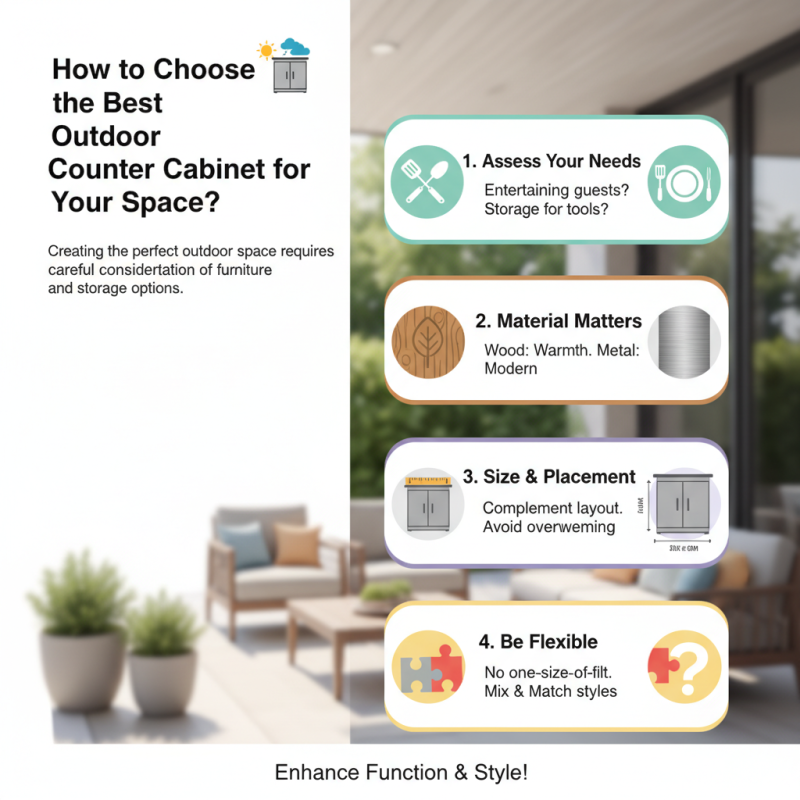
The right Outdoor Counter Cabinet should be durable, weather-resistant, and visually appealing. Think about the materials used. Wood adds warmth, while metal offers a modern touch. Consider the cabinet's height and size. It should complement your outdoor layout without overwhelming it.
But even with careful planning, selecting the most suitable cabinet can be a challenge. There is no one-size-fits-all solution. Reflect on your typical outdoor activities. Do you often entertain guests or need storage for gardening tools? This reflection can guide you toward the right choice. Stay open to adjustments and be willing to mix and match styles to discover what truly fits your space.
Factors to Consider When Selecting an Outdoor Counter Cabinet
Choosing the right outdoor counter cabinet requires careful consideration of several factors. Start by evaluating the size of your available space. Measure the area where you plan to place the cabinet. A cabinet that is too large may overwhelm your outdoor setting. Conversely, a cabinet that is too small may not meet your storage needs. Think about how you will use this space. Will it mostly serve food and drinks, or will you store utensils and supplies?
Material is another vital factor. Consider options like stainless steel, wood, or resin. Each material has its unique aesthetic and durability. Stainless steel offers a sleek, modern look and is resistant to rust. Wood can provide a warm, rustic feel, but it may require more maintenance. Reflect on your climate as well. Harsh weather may influence your choice. Always opt for a material that can withstand the elements.
Storage options play a significant role too. Ensure the design incorporates shelves, drawers, or even cabinets. These features facilitate organization and accessibility. Think about how to arrange your items for practical use. A cluttered cabinet can quickly become a frustrating problem. Aim for a balance between aesthetics and functionality. The right combination meets your needs while harmonizing with your outdoor décor.
Assessing Your Available Outdoor Space for Cabinet Placement
Choosing the right outdoor counter cabinet hinges on understanding your space. Measure your patio or garden area where the cabinet will sit. A survey by the Outdoor Furniture Association shows that over 70% of homeowners overlook this step. They end up with cabinets too large or too small for their outdoor setting.
Considerations include the location. Is it near a grill? A prep area? Ideally, install cabinets within easy reach of cooking zones. This enhances functionality and creates a seamless workspace. The American Society of Landscape Architects suggests that cabinets should blend with the overall design. Think about aesthetics—will your cabinet match your existing outdoor decor?
Seeking a balance between style and utility is essential. A cabinet that appears visually appealing yet doesn't meet storage needs can lead to frustration. Be mindful of elements like climate and exposure. Rain, sun, and humidity can affect cabinet materials. Materials that are durable and weather-resistant tend to stand the test of time. Yet, be cautious—overly expensive options do not guarantee quality. Local climate can significantly impact the lifespan of outdoor cabinets. Consider your region's weather patterns before deciding.
Materials and Durability: Choosing the Right Cabinet for Outdoor Use
When selecting an outdoor counter cabinet, materials and durability are crucial factors. Cabinets are exposed to various elements, including rain, sunlight, and temperature fluctuations. Choosing a weather-resistant material can make a significant difference in the long run. Consider stainless steel, which provides strength and a sleek look. Alternatively, teak wood offers natural beauty but requires regular maintenance to prevent degradation.
Another option is plastic. High-density polyethylene is lightweight and easy to clean. While it doesn’t have the elegance of wood or metal, it’s practical and durable. Keep in mind, plastic may fade over time, losing its appeal. Reflect on where you live and the typical weather conditions. Extreme stress from sun or storm could cause some materials to fail prematurely.
Focus on functional details as well. Check for features like shelves or ventilation. Some cabinets may look sturdy but lack inner support, leading to wear. Be critical when assessing construction. Inspect hinges and locks, as these parts often endure heavy use. Ultimately, understanding how materials behave in your specific environment will guide you to a more durable choice.
How to Choose the Best Outdoor Counter Cabinet for Your Space?
| Material Type | Durability Rating (Years) | Weather Resistance | Maintenance Level | Price Range ($) |
| Wood | 5-15 | Moderate | High | 200-800 |
| Metal | 10-20 | High | Low | 300-1000 |
| Plastic | 5-10 | Moderate | Low | 100-400 |
| Wood Composite | 8-15 | Moderate | Moderate | 150-600 |
| Stone | 20-50 | Very High | Low | 600-2000 |
Design and Style: Matching Your Outdoor Aesthetic
When designing an outdoor space, the aesthetic is crucial. Your outdoor counter cabinet should complement this design. Many homeowners overlook the significance of style in outdoor cabinetry. It’s not just about function; it’s also about how it fits into your overall environment.
According to a 2021 industry report, 67% of consumers prioritize style when selecting outdoor furniture. This statistic highlights the importance of matching your outdoor cabinetry with existing elements, such as patio furniture and outdoor décor. A cohesive look creates a welcoming atmosphere. Choose colors and materials that reflect your patio’s vibe. Rustic wood finishes work well in natural settings, while sleek metals suit modern designs.
Spatial considerations matter, too. An oversized cabinet can overpower a small patio, while a minimalist design may get lost in a vast outdoor area. Pay attention to proportions. For example, if your space is limited, select a compact cabinet with clever storage solutions. This choice will enhance usability without disrupting the flow of your outdoor area. Balancing form and function is essential, but it often takes some trial and error. Embrace the imperfections, and reassess your selections as your outdoor space evolves.
Storage Needs: Evaluating What to Store in Your Outdoor Cabinet
When selecting an outdoor counter cabinet, understanding your storage needs is crucial. Start by considering what items you intend to keep. Are you storing gardening tools, cushions, or grilling supplies? Each category requires different dimensions and shelf configurations. For instance, long-handled tools need vertical space, while delicate items may require secure, enclosed storage.
Think about the materials. Durable options withstand weather changes. Plastic and metal are lightweight yet resilient. Wood provides warmth but may require care to prevent rot. Assessing your climate can provide insights into material longevity. Reflect on how often you’ll access these items. If you need frequent access, position the cabinet close to activity zones.
Don’t forget about ease of organization. Use bins or dividers for smaller items, helping to keep everything tidy. It’s easy to overlook the importance of maintenance. Regularly clearing out and organizing can enhance functionality. Be prepared for occasional overstuffing; this might prompt a cabinet rethink. Building a practical storage solution requires continuous reflection on your evolving needs.